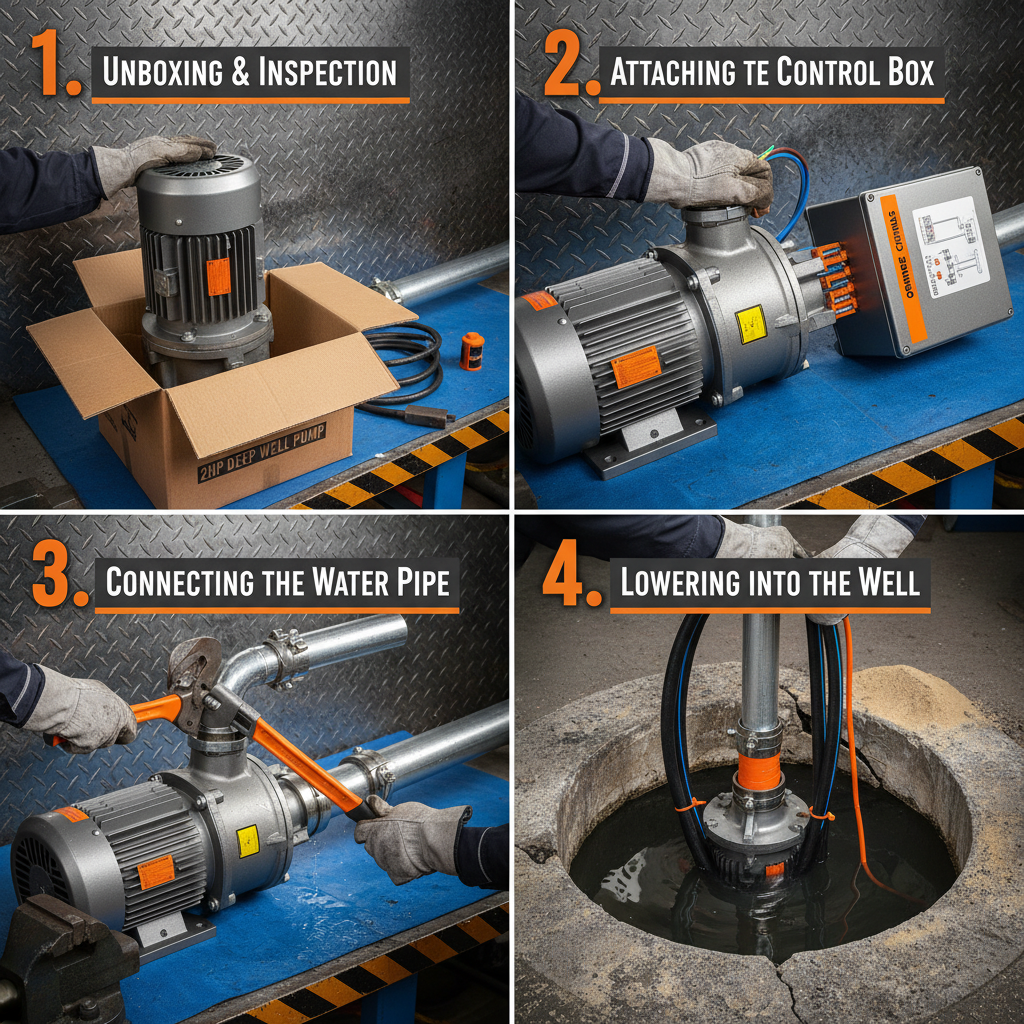
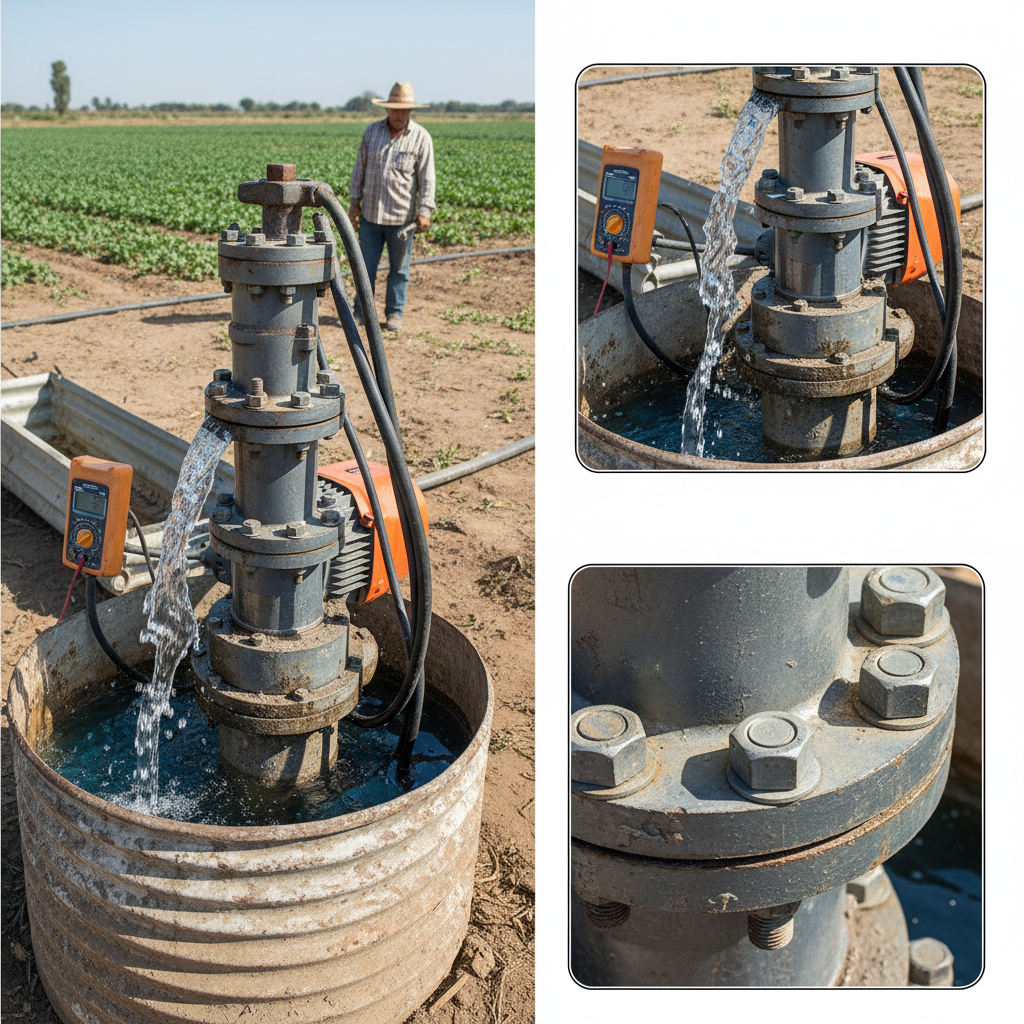
Selecting the right water extraction system often comes down to a critical decision regarding the pump's placement and motor configuration. In deep-well scenarios, the transition from surface-mounted systems to fully submerged units has fundamentally changed how agricultural and industrial sites manage their water security.
The engineering challenge lies in balancing lift capacity, energy efficiency, and resistance to the corrosive nature of groundwater. For many operators, the primary concern is no longer just about moving water, but about ensuring that the equipment can survive years of continuous immersion without catastrophic motor failure or impeller wear.
Navigating the landscape of submersible well pump manufacturers requires an understanding of the specific technical trade-offs between different motor cooling methods and material grades. This guide examines the operational logic and selection criteria for high-performance submersible systems.


The core principle of the submersible system is the elimination of suction lift limitations. By placing the pump entirely below the dynamic water level, the system utilizes the weight of the water column to push fluid into the intake, effectively removing the risk of cavitation that plagues surface pumps.
Modern designs, such as the QJ series, utilize a multi-stage impeller configuration to build the necessary pressure for deep-well extraction. This mechanical approach allows for efficient transport of water from depths exceeding 70 meters, provided the motor is correctly cooled and the vertical alignment is maintained.
Unlike standard air-cooled motors, the specialized motors used by professional submersible well pump manufacturers often employ a "wet" structure. In this configuration, the motor cavity is filled with clean water or distilled liquids, which serve two primary functions: thermal dissipation and bearing lubrication.
A critical component in this design is the pressure regulating film. As the motor operates and temperature rises, the internal water expands; the film adjusts for this pressure difference, preventing seal failure and ensuring the motor remains airtight. Additionally, sand rings and dual oil seals are integrated to prevent abrasive particulates from entering the stator and rotor assembly.
The structural integrity is further bolstered by the use of high-insulation winding wire and computer-aided CAD design, which optimizes the fluid dynamics around the pump shaft and impeller, reducing energy loss and mechanical vibration during continuous operation.
Operating a submersible pump requires strict adherence to water quality and electrical specifications. For a standard 380V/50Hz system, the water temperature must typically remain below 20°C, and the pH value should be maintained between 6.5 and 8.5 to prevent accelerated corrosion of the internal components.
System longevity depends on the "3-meter rule": the bottom of the pump must be at least 3 meters above the well floor to avoid inhaling sediment, while the intake must remain 1 to 1.5 meters below the dynamic water level to prevent air entrainment and bearing damage.
Electrical protection is equally vital. Because these units operate in a conductive environment, they must be paired with distribution boxes featuring overload, phase-loss, and undervoltage protection. Any fluctuation in current exceeding 20% of the rated value is usually an indicator of pump jamming or water level drop, requiring immediate shutdown.
Different application needs dictate the choice of pump architecture. While standard Deep Well Submersible Pumps are the workhorses for general irrigation, specialized units like the QJR Hot Water series or QJP Fountain pumps are engineered for specific thermal or aesthetic requirements.
The efficiency of these units is measured not just by flow rate, but by their ability to maintain a stable output relative to the well's recharge rate. Typically, the pump output should be controlled between 0.7 and 1.2 times the rated flow to avoid motor burnout or dry-running.
In river or lake water intake, where water levels fluctuate seasonally, a Float Type Deep Well Submersible Pump is the most practical choice. These units can adjust their vertical position automatically, ensuring the intake remains submerged and optimally positioned regardless of the surface level, thereby reducing civil engineering costs.
For high-rise water supply or mountain irrigation, the focus shifts to head pressure. In these settings, Stainless Steel Series pumps are preferred to combat potential groundwater acidity and ensure potable water quality, while the motor must be precisely matched to the total dynamic head to avoid inefficiency.
The introduction of the QJB Frequency Conversion Special series represents a major shift in pump management. Traditional pumps run at a fixed speed, often leading to inefficiency when the well flow doesn't match the rated output. Frequency conversion allows the motor speed to be adjusted in real-time.
This capability prevents the "cycling" effect—where a pump starts and stops frequently—which is the primary cause of motor winding failure. By maintaining a constant pressure or flow rate, these systems reduce electrical surges and extend the lifespan of the thrust bearings and seals.
Furthermore, the integration of automated controllers allows for "smart" water management, where the pump can react to sensor data from the well, optimizing energy consumption and ensuring that the water level never drops to a dangerous threshold.
When evaluating submersible well pump manufacturers, buyers should move beyond simple price-per-unit metrics. The total cost of ownership is determined by the quality of the motor winding insulation and the precision of the CNC-machined accessories.
A robust evaluation framework considers the material compatibility with the local water chemistry (e.g., chloride ion levels) and the manufacturer's ability to customize the pump stages for specific lift requirements. Using a "standard" pump in a "non-standard" well often leads to premature failure.
The following table provides a relative suitability guide based on common industrial and agricultural constraints.
| Application Scenario | Critical Requirement | Recommended Series | Primary Risk Factor |
|---|---|---|---|
| Agricultural Irrigation | High Volume/Mid Lift | QJ Series | Sediment Intake |
| Potable Water Supply | Contamination Control | Stainless Steel | Chemical Corrosion |
| Fluctuating Reservoirs | Position Adaptation | Float Type | Cable Tension |
| Industrial Hot Water | Thermal Resistance | QJR Series | Seal Degradation |
| Precision Fountains | Flow Stability | QJP Series | Pressure Surges |
| Variable Demand | Energy Efficiency | QJB (Freq Conv) | Electronic Noise |
Water-filled motors use a clean water medium for cooling and lubrication, which eliminates the risk of environmental contamination in the event of a seal leak. This makes them safer for drinking water applications. Additionally, water is an effective thermal conductor, helping the motor dissipate heat efficiently during long cycles of continuous operation, provided the water quality meets the specified pH and impurity limits.
The installation depth must be balanced between two limits. First, the pump must be at least 3 meters above the bottom of the well to prevent the intake of sand and silt. Second, the pump's water inlet must be submerged at least 1 to 1.5 meters below the dynamic water level (the level during pumping) to avoid air entrainment, which can cause cavitation and damage the rubber bearings.
Frequency conversion (as seen in the QJB series) allows the pump to adjust its RPM to match the actual water inflow of the well. In wells with slow recharge rates, a fixed-speed pump may exhaust the water too quickly, leading to dry-running. A frequency-controlled pump slows down to match the recharge rate, maintaining a steady flow and significantly reducing the electrical stress caused by frequent starting and stopping.
Key indicators include a sudden increase in operating current (exceeding 20% of rated current), severe vibration or noise during operation, and a drop in water output despite constant power. Additionally, if the insulation resistance of the motor falls below 0.5 megaohms during a thermal test, it indicates a breach in the winding insulation, requiring immediate inspection or replacement of the motor.
No, standard submersible pumps are typically rated for water temperatures below 20°C. Extracting hot water requires a specialized series, such as the QJR, which uses high-temperature resistant seals and specific winding insulation. Using a standard pump in hot water will cause the rubber bearings to degrade and the motor insulation to fail rapidly due to thermal stress.
In freezing conditions, the water inside the motor cavity can expand as it turns to ice, potentially cracking the motor shell or damaging internal components. To prevent this, all water must be drained from the motor cavity before storage. The unit should be kept in a dry, indoor environment with a temperature below 40°C, and the cable should be securely tied to prevent kinking.
The effectiveness of a deep well water system is not solely dependent on the pump's power, but on the synergy between its mechanical design and the specific environment of the well. From the critical "3-meter rule" to the adoption of frequency conversion, every technical detail serves to mitigate the harsh realities of submerged operation.
By prioritizing material compatibility and precise installation, operators can transition from reactive repairs to a stable, long-term water strategy. Whether utilizing the adaptive nature of float pumps or the durability of stainless steel series, the goal remains a balance of efficiency, longevity, and reliable output.

 Afrikaans
 Albanian
 Amharic
 Arabic
 Armenian
 Azerbaijani
 Basque
 Belarusian
 Bengali
 Bosnian
 Bulgarian
 Catalan
 Cebuano
 Corsican
 Croatian
 Czech
 Danish
 Dutch
 Esperanto
 Estonian
 Finnish
 French
 Frisian
 Galician
 Georgian
 German
 Greek
 Gujarati
 Haitian Creole
 Hausa
 Hawaiian
 Hebrew
 Hindi
 Miao
 Hungarian
 Icelandic
 Igbo
 Indonesian
 Irish
 Italian
 Japanese
 Javanese
 Kannada
 Kazakh
 Khmer
 Rwandese
 Korean
 Kurdish
 Kyrgyz
 Lao
 Latin
 Latvian
 Lithuanian
 Luxembourgish
 Macedonian
 Malgashi
 Malay
 Malayalam
 Maltese
 Maori
 Marathi
 Mongolian
 Myanmar
 Nepali
 Norwegian
 Norwegian
 Occitan
 Pashto
 Persian
 Polish
 Portuguese
 Punjabi
 Romanian
 Russian
 Samoan
 Scottish Gaelic
 Serbian
 Sesotho
 Shona
 Sindhi
 Sinhala
 Slovak
 Slovenian
 Somali
 Spanish
 Sundanese
 Swahili
 Swedish
 Tagalog
 Tajik
 Tamil
 Tatar
 Telugu
 Thai
 Turkish
 Turkmen
 Ukrainian
 Urdu
 Uighur
 Uzbek
 Vietnamese
 Welsh
 Bantu
 Yiddish
 Yoruba
 Zulu
 English