
Dec . 10, 2024 22:18 Back to list
Efficient Solutions for Deep Well Submersible Pumping Applications and Technologies
Submersible Deep Well Pumps An Overview
Submersible deep well pumps have become an essential technology in the field of water extraction and supply, particularly in areas where water is located deep underground. These pumps are designed to operate underwater, providing an efficient means of lifting water from wells that may be hundreds of feet deep. In this article, we will delve into the workings, applications, advantages, and maintenance of submersible deep well pumps.
How Submersible Deep Well Pumps Work
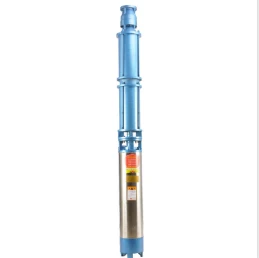
A submersible deep well pump is a type of centrifugal pump that is submerged in water within a well. The pump consists of an electric motor, a pump body, and multiple impellers that work together to lift water from depths that are often beyond the reach of traditional pumps. The motor, typically hermetically sealed, is designed to prevent water from entering and damaging the internal components.
When the motor is activated, it drives the impellers, which spin and create a pressure differential. This pressure differential allows water to be drawn into the pump and pushed upward through a discharge pipe. This design not only makes it efficient in lifting water but also minimizes issues related to cavitation, which can occur in surface pumps.
Applications of Submersible Deep Well Pumps
Submersible deep well pumps find applications in various fields, including
1. Agriculture Farmers often use these pumps to extract water from deep aquifers to irrigate crops, ensuring a reliable water supply for optimal growth.
2. Municipal Water Supply Many municipalities rely on submersible pumps to provide clean drinking water from deep wells, thereby supporting the water needs of residential and commercial areas.
3. Industrial Uses Industries that require substantial amounts of water for processes, such as mining and manufacturing, utilize submersible pumps to access groundwater efficiently.
4. Dewatering Construction projects often require the removal of groundwater to create safe work environments, and submersible pumps effectively manage water levels in excavations.
Advantages of Submersible Deep Well Pumps
The advantages of using submersible deep well pumps include
submersible deep well pump

- Efficiency Submersible pumps are generally more energy-efficient than other types of pumps because they are situated at the water source, reducing the energy needed to lift the water.
- Durability These pumps are built to withstand harsh conditions, including high pressures, and are typically made from corrosion-resistant materials that ensure a long lifespan.
- Minimal Noise Since submersible pumps are located underwater, they operate quietly, making them ideal for residential areas where noise pollution is a concern.
- Space-Saving Submersible pumps do not require a separate pump house, which saves space and reduces construction costs.
Maintenance of Submersible Deep Well Pumps
Proper maintenance of submersible deep well pumps is crucial to extend their operational life and ensure efficient performance. Key maintenance practices include
1. Regular Inspections Conduct periodic checks to monitor for unusual vibrations, sounds, or decreases in performance, which may indicate issues.
2. Electrical Checks Inspect electrical connections for any signs of wear or corrosion, and ensure that the power supply is stable and sufficient.
3. Cleaning Keep the surrounding area free of debris and sediment that could potentially enter the pump and cause blockages or damage.
4. Bearing Lubrication Regularly check and, if necessary, replace lubricants for the pump bearings to prevent overheating and wear.
5. Testing Performance Periodically test the pump output to ensure it meets the required flow rates and pressure levels, adjusting as necessary.
Conclusion
Submersible deep well pumps are an indispensable technology for water extraction in numerous applications, ranging from agriculture to municipal supply. Their efficiency, durability, and space-saving design make them a preferred choice for many users. By adhering to regular maintenance routines, operators can ensure their pumps provide reliable service for years to come, making the most of this remarkable technological advancement in water management.
-
Water Pumps: Solutions for Every Need
NewsJul.30,2025
-
Submersible Well Pumps: Reliable Water Solutions
NewsJul.30,2025
-
Stainless Steel Water Pumps: Quality and Durability
NewsJul.30,2025
-
Powerful Water Pumps: Your Solution for Efficient Water Management
NewsJul.30,2025
-
Oil vs Water Filled Submersible Pumps: Which is Better?
NewsJul.30,2025
-
Deep Well Pumps: Power and Reliability
NewsJul.30,2025
-
 Water Pumps: Solutions for Every NeedWhen it comes to handling dirty water, the dirty water pump is a must-have.Detail
 -
 Submersible Well Pumps: Reliable Water SolutionsWhen it comes to ensuring a reliable water supply, submersible well pumps are a top choice.Detail
 -
 Stainless Steel Water Pumps: Quality and DurabilityWhen it comes to choosing a water pump, the stainless steel water pump price is a crucial factor.Detail
 Afrikaans
 Albanian
 Amharic
 Arabic
 Armenian
 Azerbaijani
 Basque
 Belarusian
 Bengali
 Bosnian
 Bulgarian
 Catalan
 Cebuano
 Corsican
 Croatian
 Czech
Czech
 Danish
 Dutch
Dutch
 Esperanto
 Estonian
 Finnish
 French
 Frisian
 Galician
 Georgian
 German
 Greek
Greek
 Gujarati
 Haitian Creole
 Hausa
Hausa
 Hawaiian
 Hebrew
 Hindi
Hindi
 Miao
Miao
 Hungarian
 Icelandic
 Igbo
Igbo
 Indonesian
 Irish
Irish
 Italian
 Japanese
 Javanese
 Kannada
 Kazakh
 Khmer
Khmer
 Rwandese
 Korean
 Kurdish
 Kyrgyz
 Lao
Lao
 Latin
Latin
 Latvian
 Lithuanian
 Luxembourgish
 Macedonian
 Malgashi
 Malay
Malay
 Malayalam
 Maltese
 Maori
Maori
 Marathi
 Mongolian
 Myanmar
 Nepali
 Norwegian
 Norwegian
 Occitan
 Pashto
 Persian
 Polish
 Portuguese
 Punjabi
 Romanian
 Russian
 Samoan
 Scottish Gaelic
 Serbian
 Sesotho
 Shona
Shona
 Sindhi
 Sinhala
 Slovak
 Slovenian
 Somali
 Spanish
 Sundanese
 Swahili
 Swedish
 Tagalog
 Tajik
Tajik
 Tamil
Tamil
 Tatar
Tatar
 Telugu
 Thai
Thai
 Turkish
 Turkmen
 Ukrainian
 Urdu
Urdu
 Uighur
 Uzbek
Uzbek
 Vietnamese
 Welsh
Welsh
 Bantu
Bantu
 Yiddish
 Yoruba
 Zulu
Zulu
 English