The global transition toward sustainable water management has placed the solar powered submersible well pump at the forefront of agricultural and industrial innovation. By leveraging photovoltaic energy to extract groundwater, these systems eliminate the reliance on expensive diesel generators and unstable electrical grids, providing a reliable lifeline for remote communities and large-scale farms alike.
Understanding the mechanics and strategic implementation of a solar powered submersible well pump is no longer just an environmental choice but an economic imperative. As energy costs fluctuate and water scarcity becomes a pressing global challenge, integrating renewable energy into deep well extraction ensures a consistent water supply while drastically reducing the carbon footprint of essential irrigation and drinking water operations.
From the arid plains of Sub-Saharan Africa to the specialized irrigation needs of modern vineyards in Europe, the adoption of these pumps signifies a shift toward autonomous water security. This comprehensive guide explores the technical nuances, practical applications, and long-term value of investing in high-efficiency solar pumping technology to achieve sustainable water independence.
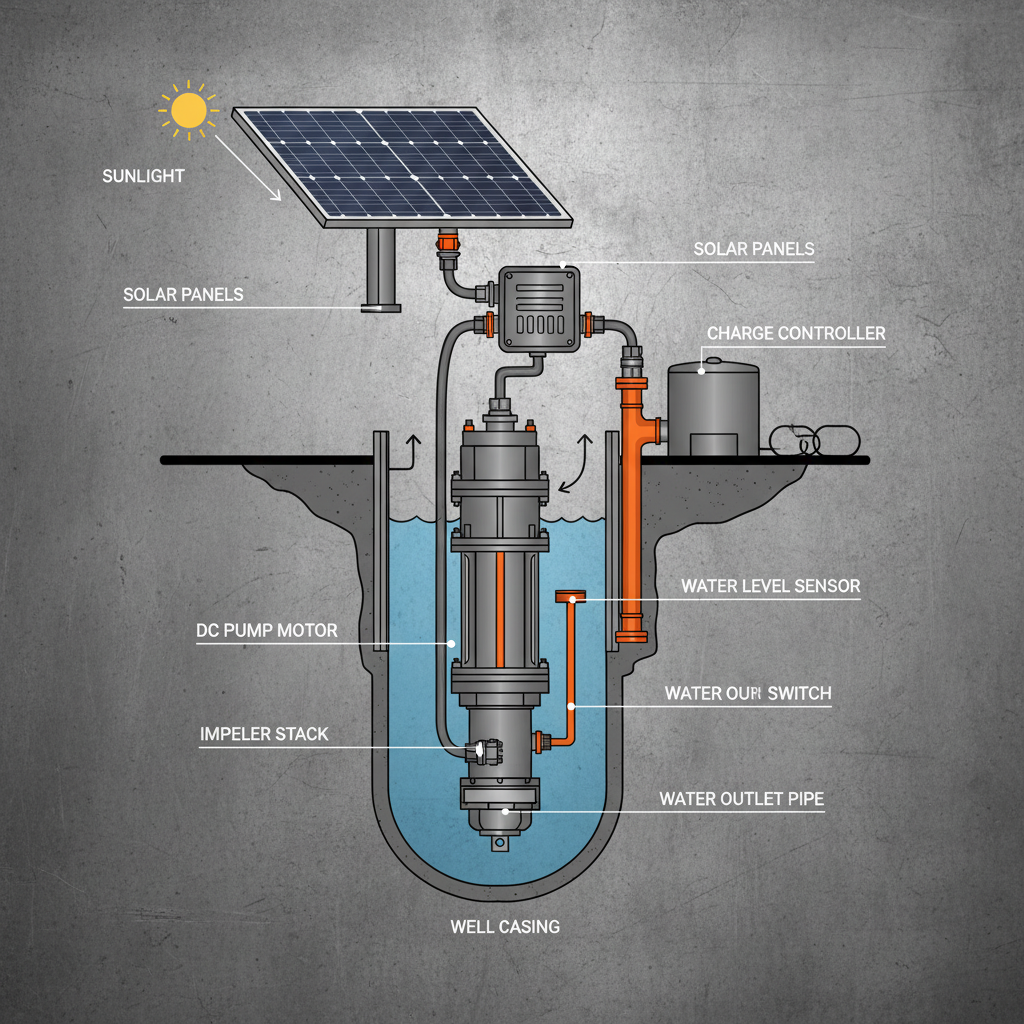
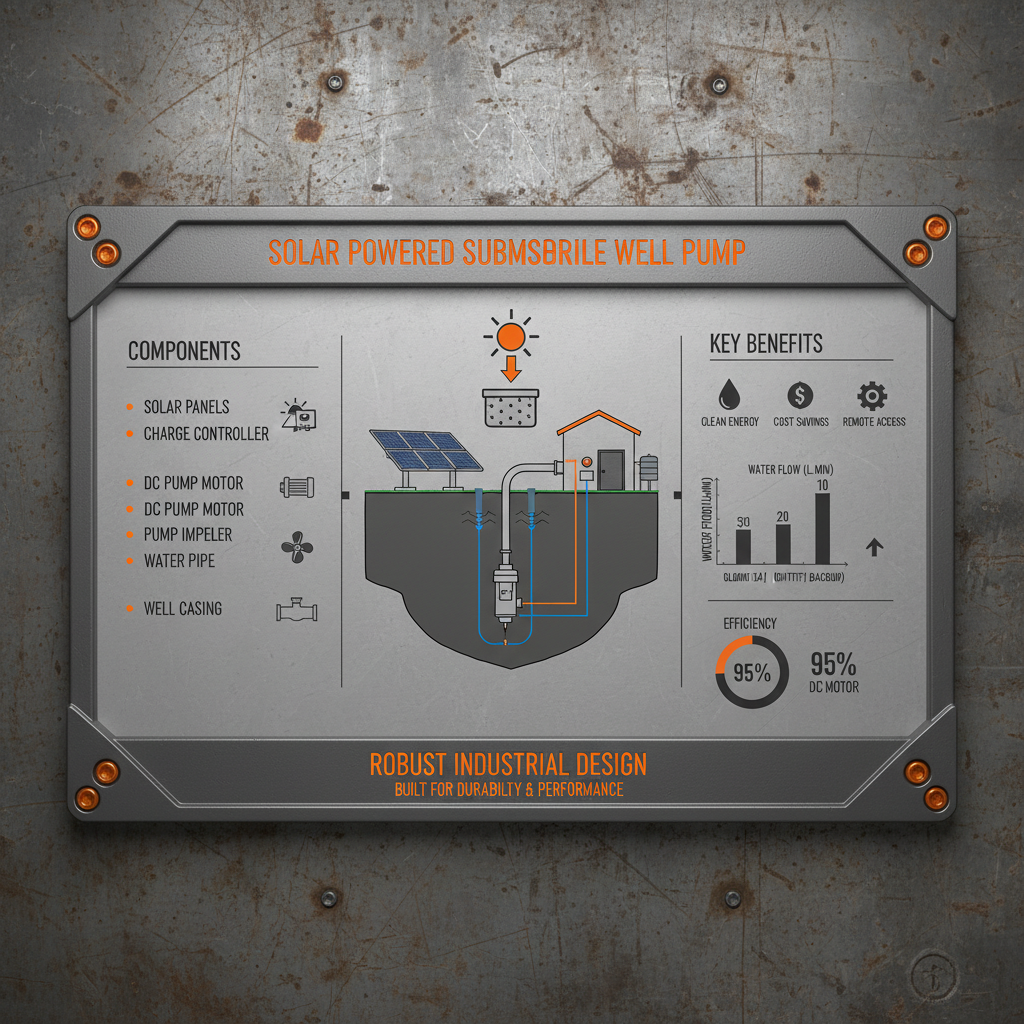
On a global scale, the demand for a solar powered submersible well pump is driven by the critical need for water accessibility in off-grid locations. According to data aligned with UN Sustainable Development Goals, billions of people still lack access to safely managed drinking water, often because the cost of transporting fuel for traditional pumps is prohibitively expensive or logistically impossible.
The integration of solar technology addresses the "last mile" delivery problem of water infrastructure. By utilizing an autonomous energy source, these pumps empower rural farmers to increase crop yields through consistent irrigation, thereby improving food security and reducing the economic vulnerability of agrarian societies in developing regions.
Since solar panels only generate electricity during daylight, these pumps typically work in one of two ways during the night: either by pumping water into an elevated storage tank during the day for gravity-fed use at night, or by utilizing a battery backup system that stores excess solar energy to run the pump after sunset.
No, they are generally much cheaper to maintain than fuel-based pumps. There are no oil changes, filters, or spark plugs to replace. The primary maintenance involves cleaning the PV panels to ensure maximum sunlight absorption and checking the electrical connections every few years.
Yes, provided the pump is correctly sized. High-head solar submersible pumps are specifically designed to push water from depths of several hundred feet. The key is matching the pump's maximum head capacity with the actual depth of the water table and adding a sufficient number of solar panels to provide the necessary torque.
Modern controllers with MPPT technology can still operate pumps at a reduced flow rate during cloudy weather. However, for critical water needs, we recommend a hybrid system (solar + grid or solar + generator) or a large storage tank that keeps a reserve of water for non-sunny periods.
High-quality monocrystalline solar panels often come with a 25-year performance warranty. The submersible pump itself, if made from stainless steel and installed correctly, typically lasts between 10 to 20 years depending on water quality and usage frequency.
Standard pumps may corrode in salt water, but specialized stainless steel series or polymer-coated pumps are designed specifically for brackish or saline environments. It is crucial to specify the water chemistry when choosing your solar powered submersible well pump to ensure material compatibility.
The transition to a solar powered submersible well pump represents a pivotal evolution in how we interact with our most precious resource: water. By combining the reliability of submersible pumping technology with the infinite energy of the sun, we can eliminate the logistical nightmares of fuel transport and the financial burden of electricity bills. From enhancing food security in rural areas to providing critical infrastructure for remote industries, the benefits of solar water extraction are both tangible and transformative.
As we look toward a future defined by climate volatility and energy transitions, the adoption of sustainable pumping solutions is no longer optional—it is a strategic advantage. Whether you are an agriculturalist, an NGO worker, or an industrial engineer, investing in high-efficiency solar pumping is a step toward true autonomy and environmental responsibility. To explore our full range of high-performance pumping solutions, visit our website: www.wellpumpact.com.

 Afrikaans
 Albanian
 Amharic
 Arabic
 Armenian
 Azerbaijani
 Basque
 Belarusian
 Bengali
 Bosnian
 Bulgarian
 Catalan
 Cebuano
 Corsican
 Croatian
 Czech
Czech
 Danish
 Dutch
Dutch
 Esperanto
 Estonian
 Finnish
 French
 Frisian
 Galician
 Georgian
 German
 Greek
Greek
 Gujarati
 Haitian Creole
 Hausa
Hausa
 Hawaiian
 Hebrew
 Hindi
Hindi
 Miao
Miao
 Hungarian
 Icelandic
 Igbo
Igbo
 Indonesian
 Irish
Irish
 Italian
 Japanese
 Javanese
 Kannada
 Kazakh
 Khmer
Khmer
 Rwandese
 Korean
 Kurdish
 Kyrgyz
 Lao
Lao
 Latin
Latin
 Latvian
 Lithuanian
 Luxembourgish
 Macedonian
 Malgashi
 Malay
Malay
 Malayalam
 Maltese
 Maori
Maori
 Marathi
 Mongolian
 Myanmar
 Nepali
 Norwegian
 Norwegian
 Occitan
 Pashto
 Persian
 Polish
 Portuguese
 Punjabi
 Romanian
 Russian
 Samoan
 Scottish Gaelic
 Serbian
 Sesotho
 Shona
Shona
 Sindhi
 Sinhala
 Slovak
 Slovenian
 Somali
 Spanish
 Sundanese
 Swahili
 Swedish
 Tagalog
 Tajik
Tajik
 Tamil
Tamil
 Tatar
Tatar
 Telugu
 Thai
Thai
 Turkish
 Turkmen
 Ukrainian
 Urdu
Urdu
 Uighur
 Uzbek
Uzbek
 Vietnamese
 Welsh
Welsh
 Bantu
Bantu
 Yiddish
 Yoruba
 Zulu
Zulu
 English